PT Catur Pratiba Nusantara (CPN) Achieves Digital Transformation via Static Site Architecture Migration

In a strategic move to fortify its digital infrastructure against escalating web traffic demands, PT Catur Pratiba Nusantara has executed a pivotal technology refresh, migrating away from the legacy LAMP (Linux, Apache, MySQL, PHP) stack augmented with WordPress. For years, this traditional dynamic architecture suffered from severe performance degradation; specifically, the integration of PHP and SQL meant that every single user request triggered a new database call to fetch content. While Redis caching offered a temporary fix, it frequently became overwhelmed during high-traffic periods on the company's resource-constrained web servers. To permanently resolve these latency issues and optimize operational costs, the firm's engineering division undertook a comprehensive rewrite using a modern, static site generation approach.
How They Transformed The Technologies
The core of this transformation lies in the adoption of three key technologies that collectively redefine how content is generated, managed, and delivered: SvelteKit, Decap CMS, and GitLab. SvelteKit serves as the front-end framework chosen to replace dynamic page rendering. Unlike WordPress, which executes PHP scripts to generate HTML in real-time, SvelteKit pre-builds static HTML files for every route on the server. This allows the web server to serve content instantly from disk without processing code or querying a database for every visitor, effectively implementing a "many reads, few writes" architecture that is inherently faster and more secure against SQL injection attacks.
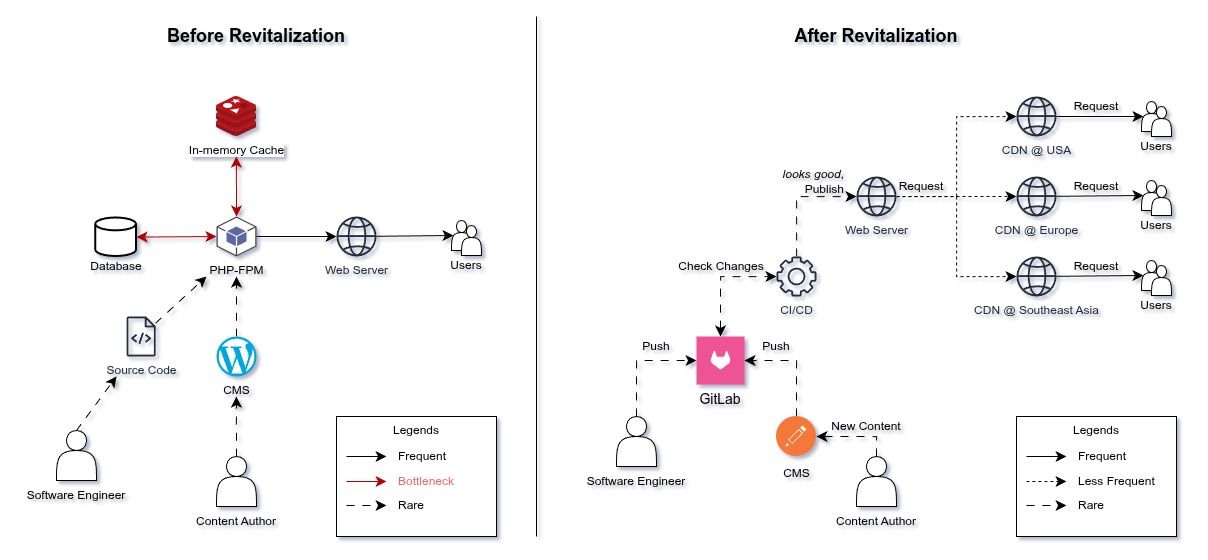
For managing the rich text content required by marketing team, the company selected Decap CMS (formerly Netlify CMS) as the frontend interface. This tool acts as a headless content editor that connects directly to the codebase rather than a separate content database. By using Decap, editors can update copy or images via a familiar dashboard, but their changes are automatically saved as Git commits. This eliminates the need for a dedicated CMS server and reduces data silos, ensuring that all content is treated as code. These changes feed directly into GitLab, which functions not just as a version control system but as the backend engine for Continuous Integration/Continuous Deployment (CI/CD). GitLab automatically scans these commits; if a change passes automated testing protocols, the static files are built and deployed to the web server instantly. If a mistake is made, engineers can simply revert to a previous commit in seconds, a safety net impossible with database-driven systems where "undo" options often require complex restoration procedures.
The Significant Impacts
Beyond performance gains, this architecture overhaul has yielded significant financial and security dividends. By leveraging Cloudflare CDN, traffic is cached at the edge globally before it reaches the origin server, virtually removing the load from the corporate web server entirely. The resulting resource savings freed up sufficient hardware capacity to run a secure intranet using specific OpenVPN configurations. This capability allows employees to securely access internal email servers and shared drives remotely without expending funds on expensive third-party productivity suites like Microsoft 365 or Google Workspace.
The financial impact of this migration is substantial; PT Catur Pratiba Nusantara estimates savings of hundreds of millions of rupiah per quarter, funds that are now being redirected toward Research & Development (R&D) initiatives to maintain technological leadership. The company notes that this methodology proves that even with limited infrastructure resources, modern tooling can provide enterprise-grade resilience and speed. As the demand for digital efficiency grows across Indonesian businesses, PT Catur Pratiba Nusantara encourages other organizations facing similar integration challenges or high server costs to consider this approach. To learn how this solution can be tailored to their current infrastructure, companies may reach out directly via the contact page.