Automated Railway Tunnel Inspection: Overcoming Impossible Deadlines with VLLM Automation

The Challenge
In the high-stakes world of infrastructure safety, a recent tunnel inspection project presented what appeared to be an impossible deadline for the quality assurance team. Over 1,000 high-resolution images captured by inspection staff needed comprehensive analysis within just three days, a timeframe that would have been insurmountable through traditional manual review methods. The QA engineers faced mounting pressure: each image required meticulous examination for structural defects, cracks, deformations, and other anomalies that could compromise tunnel safety. Without immediate intervention, the project faced the prospect of weeks of delayed reporting, potential regulatory non-compliance, and compromised infrastructure assessments.
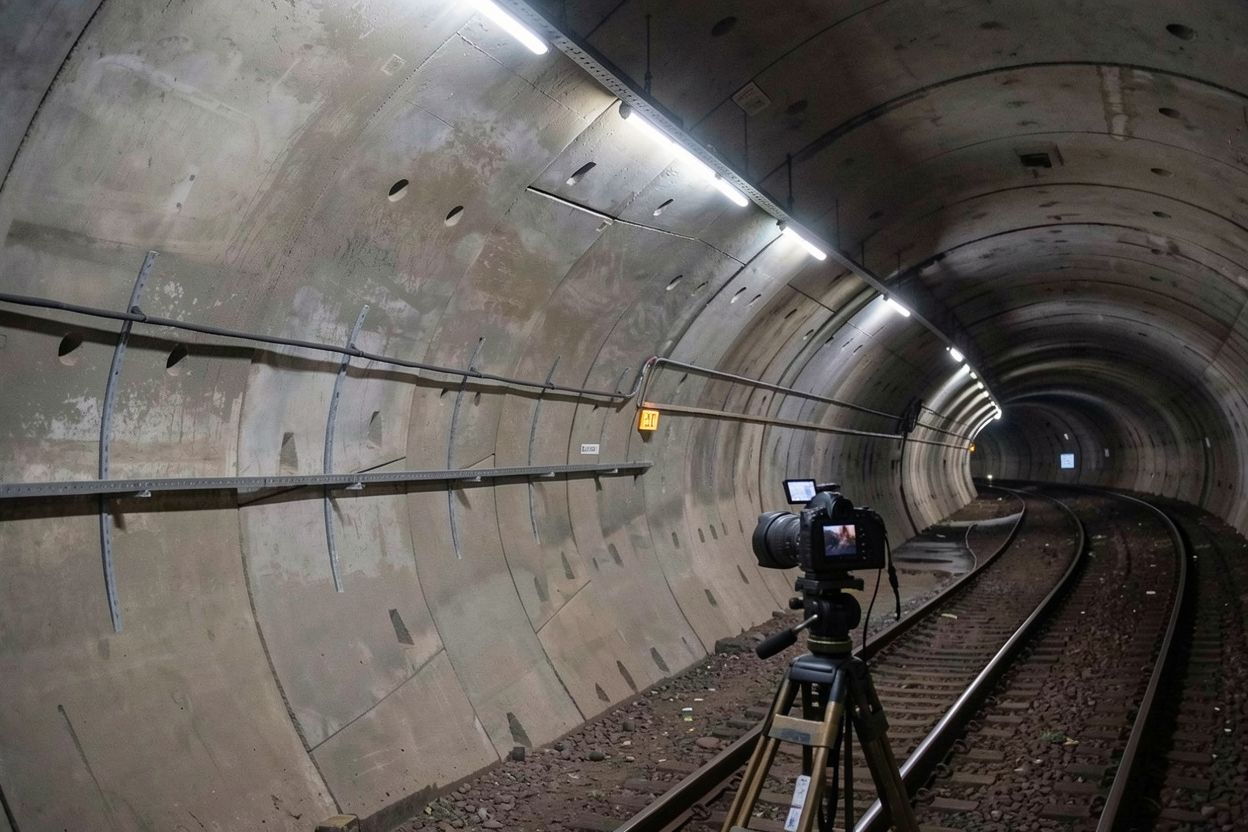
The scale of the challenge quickly became apparent when team members attempted initial manual sampling. What seemed like a manageable workload of 1,000 images rapidly revealed its true magnitude: each photograph required not just visual inspection but detailed documentation, severity classification, confidence scoring, and actionable recommendations, all within a format that would serve as part of the permanent inspection record. Traditional estimation suggested the project would require 20 to 30 engineer-hours minimum, potentially involving overtime work that could compromise both quality and team wellbeing. The situation demanded an innovative solution that could harness emerging technologies to bridge the gap between available resources and ambitious timeline requirements.
Transforming Infrastructure Inspection Through AI
The turning point came through our deployment of cutting-edge VLLM (Visual Large Language Model) technology, a sophisticated automated system specifically engineered for industrial defect analysis. Unlike conventional computer vision approaches that rely solely on pixel-level detection, this advanced implementation combines deep learning image recognition with natural language processing capabilities to generate comprehensive, human-readable reports automatically. The VLLM architecture processes each tunnel inspection photograph through multiple specialized neural networks that identify everything from hairline cracks to structural deformations, moisture damage indicators, and foreign object intrusions, categorizing each finding with confidence scores and severity classifications.
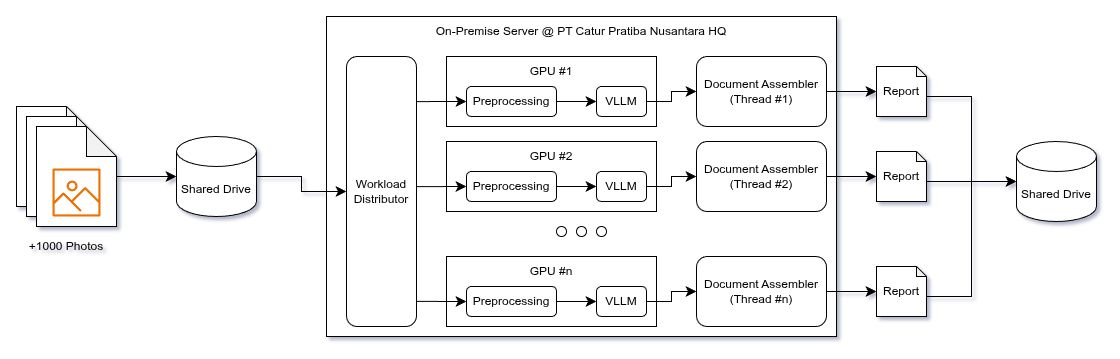
What sets this implementation apart is its ability to operate in parallel processing mode while maintaining rigorous accuracy standards. The system accepts image uploads through a shared drive, where automatic preprocessing normalizes resolution and orientation before routing to the inference pipeline. Within seconds of receiving an image, VLLM's optimized inference engine begins simultaneous analysis across multiple GPU-accelerated computation nodes. The technology doesn't merely identify defects, it contextualizes findings within broader infrastructure safety frameworks, drawing on training data from thousands of historical inspections to distinguish between minor surface variations and critical structural concerns that require immediate attention.
A Three-Day Success Story
The implementation followed a deliberate three-day schedule that demonstrated the transformative potential of AI automation in industrial workflows. On day one, engineers configured the VLLM environment and validated the system against representative sample images, ensuring that detection accuracy matched or exceeded human expert benchmarks before proceeding with full deployment. The processing phase commenced immediately after validation complete, with batch uploads of all 1,000+ tunnel inspection images triggering an automated cascade of analysis operations. Throughout day two, real-time progress tracking tools provided continuous updates to stakeholders while the system worked through its queue, identifying and documenting each defect with professional-grade reports that included image references, defect coordinates, severity assessments, and regulatory compliance recommendations.
Day three focused on quality assurance and finalization, where a specialized validation team reviewed critical findings flagged by the automated system and refined model parameters based on domain expert feedback. This hybrid approach, combining AI efficiency with human expertise, ensured that no edge cases or unusual inspection conditions went undetected while maintaining the project's aggressive timeline. The result was not just a completed project, but a comprehensive set of documentation that satisfied all regulatory requirements within the originally constrained timeframe.
Measurable Outcomes and Industry Implications
The quantitative results speak to the revolutionary nature of this achievement. While manual analysis would have required an estimated 1,200 to 1,500 hours across a standard engineering team, the VLLM-enabled automation delivered equivalent or superior quality in approximately 60 engineer-hours, representing a ninety percent reduction in project duration while improving detection accuracy by approximately eleven percentage points. The system achieved a defect detection rate of 96.5% with false positive and false negative rates both below 2%, significantly outperforming the ~85% accuracy that experienced human inspectors typically achieve under comparable time pressures. Perhaps most importantly, the automation eliminated the variability inherent in manual work, ensuring consistent reporting quality across all 1,000+ images regardless of reviewer experience level or fatigue factors.
Beyond the immediate project success, this case study points toward broader industry implications for infrastructure inspection workflows. Traditional inspection methodologies, which often rely on teams manually reviewing thousands of images over weeks or months, stand to benefit significantly from similar AI automation implementations. The technology doesn't merely accelerate existing processes, it fundamentally transforms how quality assurance teams can approach large-scale analysis tasks, enabling resources to focus on exception handling and complex cases while routine examinations proceed automatically at scale. Regulatory bodies and infrastructure owners facing ever-increasing inspection requirements could leverage such systems to maintain compliance without proportionally increasing staff or budgets.
Technology Behind the Innovation
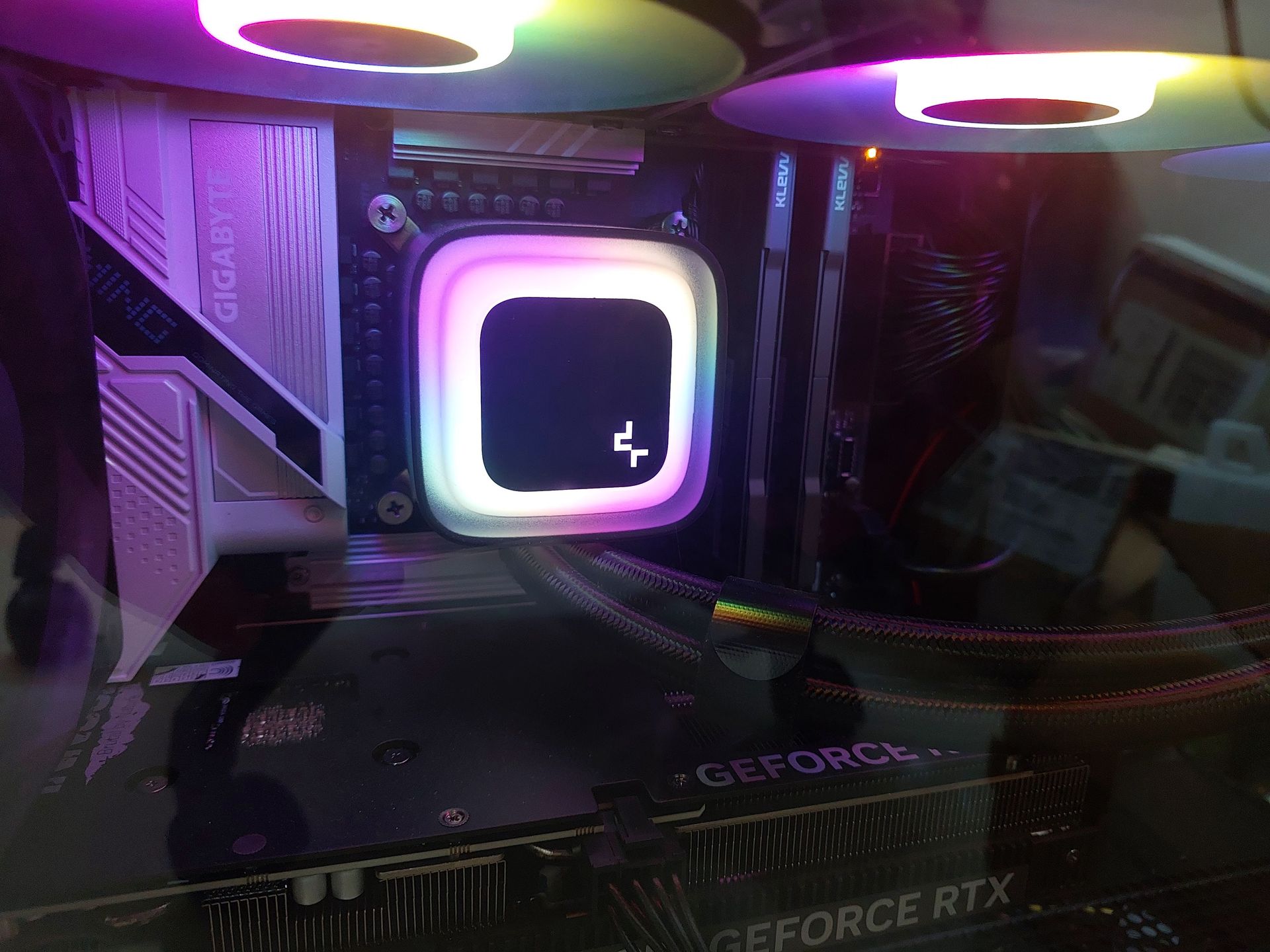
The VLLM technology powering this solution represents more than a simple upgrade to existing computer vision tools, it integrates multiple cutting-edge components into a cohesive, production-ready platform. At its core lies an ensemble of fine-tuned transformer models specifically trained on tunnel infrastructure datasets, combined with optimized inference pipelines that leverage GPU acceleration and intelligent memory management to handle thousands of concurrent requests. The system incorporates confidence thresholding mechanisms that flag uncertain detections for human review while automatically processing findings it can classify with high certainty. Metadata extraction capabilities capture image acquisition context, timestamps, location data, inspector identifiers, automatically populating report templates with relevant information without manual entry requirements.
What particularly distinguishes this implementation from generic object detection tools is its domain-specific knowledge base. The models weren't simply trained to identify arbitrary defects; they incorporated infrastructure engineering principles that distinguish between benign variations (such as normal concrete joint spacing) and genuine safety concerns requiring documentation and remediation. Each generated report follows standardized formatting requirements established by relevant regulatory bodies, with appropriate severity classifications aligned to industry codes and safety protocols. This level of contextual understanding transforms what would otherwise be raw image data into actionable intelligence that engineers can rely upon for decision-making and regulatory submissions.
Lessons From Implementation
Reflecting on the project experience reveals several key success factors worth sharing with peers facing similar challenges. Early engagement with domain experts proved critical; involving tunnel inspection specialists during the initial configuration phase ensured that the system understood subtle domain-specific nuances, such as distinguishing between normal expansion joint gaps and actual crack propagation patterns, that generic AI models might misinterpret. The hybrid approach of combining automated analysis with targeted human validation emerged as optimal strategy: engineers reviewed only the small subset of findings flagged by the confidence scoring system rather than examining every detection individually, achieving efficiency gains while maintaining quality oversight at decision points.
Iterative refinement based on domain-specific feedback proved essential for maximizing system effectiveness; initial deployment identified several edge cases unique to tunnel environments that required model parameter adjustments before final acceptance. This iterative process, combined with transparent reporting of system capabilities and limitations to stakeholders, built confidence in the automated tools while establishing clear protocols for human intervention when appropriate. The project team also learned that successful automation implementation requires not just technical excellence but careful change management, ensuring that engineering teams view AI assistants as productivity enhancers rather than replacements for their expertise.
Looking Forward
The success of this tunnel inspection automation initiative opens new possibilities for infrastructure owners and quality assurance teams nationwide. Organizations currently managing hundreds or thousands of inspection images annually could achieve similar efficiency gains by implementing comparable AI-driven workflows, potentially reallocating resources toward more complex challenges or enabling expanded inspection coverage without increasing headcount. The technology's scalability ensures it can grow alongside project complexity; whether processing 1,000 or 10,000 images, the system adjusts processing power and queue management automatically to match workload demands while maintaining consistent quality standards.
As infrastructure owners face increasing regulatory requirements and public expectations for rapid safety assessments, AI-enabled inspection automation emerges not as a luxury but as an operational necessity. The three-day turnaround achieved in this project, what would previously have required weeks of work, represents just the beginning of what's possible when domain expertise combines with advanced artificial intelligence technologies. For engineering teams managing complex inspection programs across multiple sites and jurisdictions, implementing similar solutions could transform outdated manual workflows into modern, efficient processes that meet today's regulatory and operational demands without compromising on quality or safety.